Saturday, 12 September 2015

Just students


Springgay and Freedman (2009) write about touch and relationality in terms of (m)othering in their quirky paper referring to Canadian visual artist, Diane Borsato’s experimental narratives in which she touched 1000 people with different reactions to the entitlement of space emerging, and slept with ten cakes in her bed to sense the materiality of such closeness. The concept of space, both interpersonal and personal, when linked to the material, highlights the relationships between things and bodies.

These relationships of “inter-embodiment” where knowledge is gained through the intermingling of bodies and non-bodies, places educators and students in in-between spaces. When our medical students are immersed in their clinical rotations they traverse this “space of movement, of development, and of becoming” (Springgay & Freedman 2009:29). The suggestion of a “bodied curriculum” is helpful as it illuminates difference in the daily realities “where bodied encounters become the performance” (Springgay & Freedman 2009:32).

In a recent focus group with six year 4 students who had just completed their 8 week Obstetrics rotation, I heard about their many difficulties in building relationships with other health team members in their attempts to offer care and support to women in labour. One student claimed that she learnt more about people in this learning rotation than about medicine. There was agreement that students felt there was just nothing that could adequately prepare them for the situations they faced - a sense of feeling at the bottom of the food chain of the medical hierarchy. Even patients who had just been through the labours of labour, sometimes asked students why some midwives were so rude to them.

One of the objects that matter is the placenta. Its removal becomes a force and intensity that disturbs learning and relationship building. There are both active and passive options for cord traction with a multiplicity of viewpoints and ways-of-doing. It can get pulled and pushed with varying levels of tension. I’m told it’s about the feeling of tightness to the puller. Great caution is needed to avoid the cord snapping. Each practitioner appears to develop their own ways that work best for them and sometimes belittle different ways recommended by others. Judgemental comments about the touch and the pull are frequently experienced by students who then feel undermined rather than encouraged in their learning to become confident doctors. The placenta moves from a position of providing life to a foetus, to a point of tension between students and those with more experience. It then becomes a waste product leaving its mark. Students find themselves trying to be people-pleasers as their thoughts drift through their own agendas for passing through to the next learning rotation by fulfilling the curricular requirements.

Listening to the students’ voices brings a different perspective to curriculum matters. When they move from theoretical lessons in the classroom to practical encounters in the local health facilities, they find themselves in this in-between space where uncertainty prevails amidst many multiplicities. Apart from the memories of such challenging moments, the smell of the placenta also lingers with students long after they have left the learning space of Obstetrics facilities.

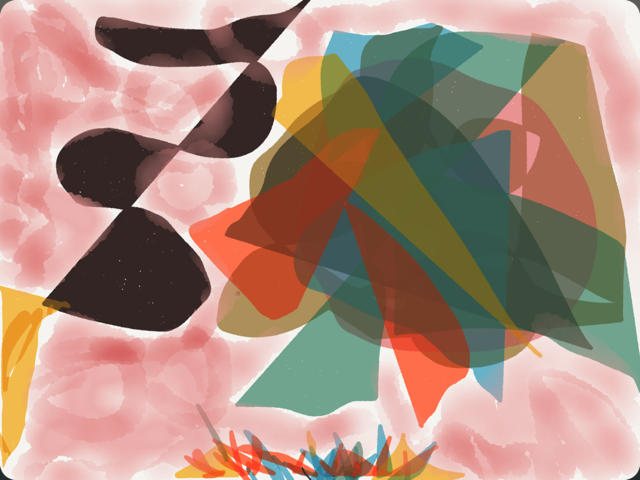
The image above was drawn on my iPad as I sat and reflected on the focus group. Using the Brushes App I tried to illustrate the powerlessness felt by students, and the force and intensity that the placenta can have on student learning. From their own drawings, 2 out of 6 students drew tearful faces indicating their struggles through this curricular imperative.

I wish I had more artistic skills to better portray the bodily encounters in my research intra-actions. Recently I was connected to the inspiring artworks by David Hockney. He uses the Brushes App on the iPad to create an innovative art collection. He shifts perspectives in unusual ways through the affordances of technology and his artistic expertise.

Springgay, S. and Freedman, D. 2009. M/othering a Bodied Curriculum Sleeping with Cake and Other Touchable Encounters. Journal of Curriculum Theorizing. 25:2:25-37.

Sunday, 6 September 2015

Acts of articulation


The Merriam-Webster online dictionary defines articulation as
  • a joint or juncture between bones or cartilages in the skeleton of a vertebrate
  • the action or manner of jointing or interrelating
  • the act of giving utterance or expression

Articulation in medicine generally refers to joints; bones articulate with each other in different ways. For instance a hinge joint provides a linear movement such as the ulna with humerus at the elbow, while a ball and socket joint such as the femur and pelvis at the hip provides constrained movement in many directions. Perhaps this can be useful when moving from binary approaches in pedagogy to postconstructionism where multiplicity matters.

The multiple roles and perspectives in real-life events contribute to authentic classroom learning according to Herrington, Reeves, and Oliver (2010). The learning environment embraces the complexity of real-world practices rather than working in a simplified version. Another one of the nine elements that are recognized in authentic tasks is articulation in terms of the expression of thoughts and feelings.

In pedagogical practices, articulation “enable[s] tacit knowledge to be made explicit” (Herrington & Kervin 2007:3). In my project articulation seems to be a strong thread that is pulled through the practice and pedagogy and in the research. Students going into their Obstetrics rotation converse with each other during the block and in preparing for their interactive workshop. Articulation occurs across several layers of interactions. In the introductory session, students glimpse into the real world of Obstetrics in Cape Town clinics where their taken-for-granted expectations are questioned. By engaging online and face-to-face at the different stages during the rotation, students can take a standpoint or question others’ perspectives.

My role is to create a safe and supportive space to foster honest articulation. The “responsibility for learning rests with the learner” rather than the teacher (Herrington, Reeves & Oliver’s 2010:190). Recently the introduction of drawings in the classroom and in the research focus group has created a multimodal approach that is enhancing the process and leading to new insights through sociomaterialism. While articulation assists students to express their feelings and to share their difficult experiences in maternal obstetrics facilities, it also acts as a channel to vent feelings of anger, disgust and helplessness.

Images have become a tool to engage with the needs of the diversity of our students. These drawings are connecting the discursive with the material providing an alternative avenue for expression. Barad (2007:267) asserts that “matter and meaning are mutually articulated”. Barad (2007:152) explains this intertwined and co-constitutive relationship: ‘Neither discursive practices nor material phenomena are ontologically or epistemologically prior. Neither can be explained in terms of the other. Neither is reducible to the other. Neither has privileged status in determining the other. Neither is articulated or articulable in the absence of the other; matter and meaning are mutually articulated’.

In a recent focus group a student explained that a classroom invitation to draw had left her powerless. However in the new space of our focus group, a large sheet of paper with markers enabled her to enthusiastically engage with a symbolic representation of her observations from a clinical encounter where a 15 year old girl in labour was treated with disrespect.

In the image above drawn using iSketchbook on my iPad I have tried to illustrate the jointing and interrelationships that occur in the different forms of articulation.

Barad, K. 2007. Meeting the universe halfway: Quantum physics and the entanglement of
matter and meaning. Durham, NC: Duke University Press.

Herrington, J & Kervin, L, Authentic learning supported by technology: 10 suggestions and cases of integration in classrooms. Educational Media International, 44(3), 219-236.

Herrington, J., Reeves, T. & Oliver, R. 2010. A guide to authentic e-learning. Routledge. London.

Sunday, 30 August 2015

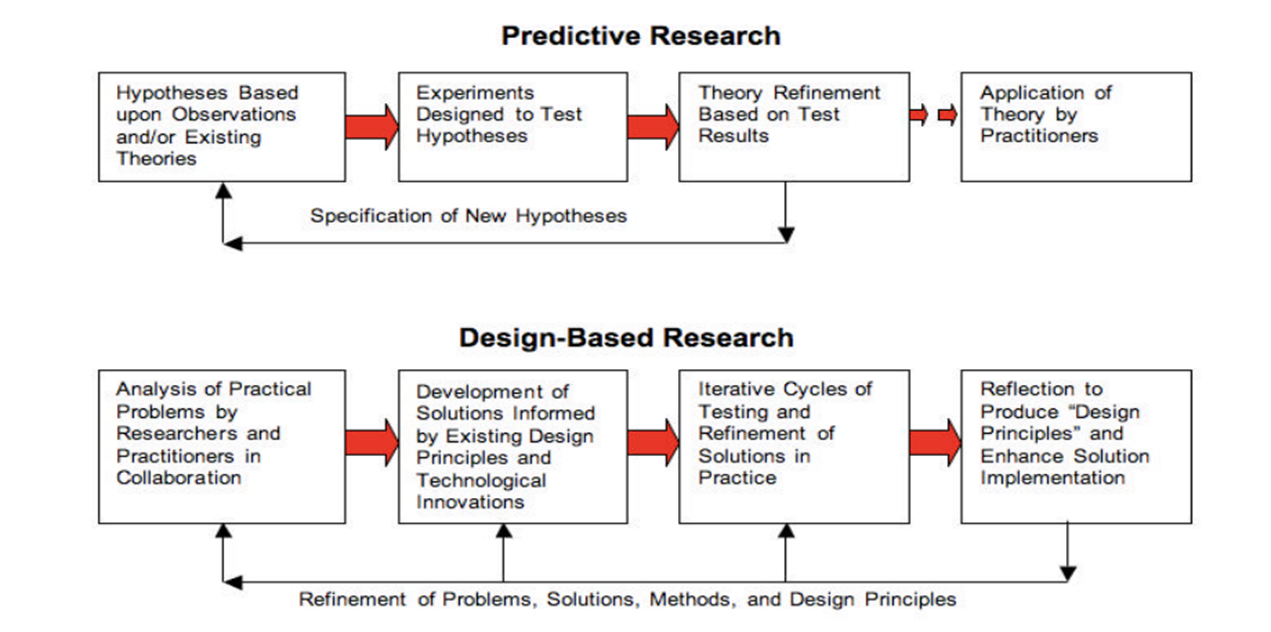
Sketching my approach in DBR


Design-based Research (DBR) is the approach chosen for my study. It provides a framework for the development of innovative improvements to pedagogical practices through the relationships linking theory, products and practice. The iterative cycles of evaluation and refinement are well suited to my teaching and research as we have five blocks of students through the year all going through the same teaching rotations in different time slots. DBR is a pragmatic approach that “focuses on understanding the messiness of real-world practice, with context being a core part of the story and not an extraneous variable to be trivialized” (Barab & Squire 2004:3).


Changes in Obstetrics learning need to be a collaborative effort from numerous stakeholders. Herrington, Reeves and Oliver (2010:189) point out that DBR offers opportunities for “supporting human interactions and nurturing learning communities”. The goal of DBR is improve practice while advancing theory that will be valuable to others.


The image above is a summary of my research project so far. It was created on the Notability App on my iPad while I was sitting on the aeroplane flying home to Cape Town. This was in preparation for our discussions with Prof Jan Herrington from Perth. Among other points related to DBR, she encouraged me to use tables. She also pointed out the importance of clearly identifying my design draft principles for this project. One of the most powerful aspects of using DBR is its emphasis on sharing and disseminating findings and principles (Wang & Hannafin 2005). The value of design principles lies in the contribution they make to the professional community.

Reeve’s model (2006)


Problem
Solutions / improvements
Implement, review & refine in cycles
Principles & artefacts
  • Silenced student voices
  • Fear
  • Curriculum as task driven
  • Disrespect in Obstetrics
Draft design principles and guidelines
  1. enable collaboration
  2. elicit articulation
  3. provide facilitation
  4. offer feedback
  5. encourage reflection
  6. demonstrate diffraction
  7. engage with relationality
  8. illuminate affect
Facilitator
  1. Explore the affordances of
technology
Implementation with data collection
Evaluation after each student block through self and student feedback

Tools used
Intro
  • WhatsApp
  • wordles
  • Google drive - forms, sheets, docs, slides
During rotation
  • critical friends
  • tips for colleagues
  • articulation & reflection
Interactive workshop
  • expert’s input
  • roleplays, poems etc
  • drawings
  • mindfulness exercise
  • WhatsApp wordle
Extra resources created
  • video recordings
  • iPad apps for blog images
Principles to be expanded
  • Co-constitution of knowledge
  • Exploring interrelationships
  • Developing collaborative spaces
  • Engaging with social injustices
  • Principles related to new materialism that decentre the human

E-learning resource to be published as an OER including
  • expert images
  • video recordings on YouTube from HOD
  • website on probing professionalism
  • more to be developed
How?
  • Literature
  • Survey senior students
  • Interviews with educators
  • Drawings
Using
  • Barad’s sociomaterialism
  • Deleuze & Guattari’s rhizome
Using
  • affordances of emerging technologies
  • group work

Data collection & analysis through a diffractive methodology
Artefacts that are emerging
  • Students’ shared reflections using the Six Step Spiral for Critical Reflexivity (SSS4CR)
  • Student roleplays/videos/poems
  • Storytelling
  • Drawings
  • Wordles
  • Blog
To develop a socially just pedagogy
To use face2face and online engagement
Using different groups of students to iteratively develop intervention and theory - 40 in each block every 8 weeks (5 blocks annually)
  1. Ethics approval received from UCT & UWC
  2. To share design principles rather than just the teaching improvement
  3. Consultative process with other actors and stakeholders

Barab, S., & Squire, K. 2004. Design-based research: Putting a stake in the ground. The Journal of the Learning Sciences, 13:1:1-14.


Reeves, T. C. 2006. Design research from a technology perspective. In J. van den Akker, K. Gravemeijer, S. McKenney & N. Nieveen (Eds.), Educational design research. London: Routledge.

Reeves, T., Herrington, J., & Oliver, R. 2005. Design research: A socially responsible approach to instructional technology research in higher education. Journal of computing in higher education, 16:2: 96-115.


Wang, F. & Hannafin, M. 2005. Design-Based Research and Technology-Enhanced Learning Environments. Educational Technology Research and Development. 53:4:5–23.  

Saturday, 15 August 2015

Communication focus


Yesterday my research path led me to facilitating a focus group with seven amazing final year students. It felt like we were together-apart, creating a transformative space for the sharing of human dis/connectiveness (Barad 2007). It was an emotional meeting place for a conversation sparked by individual drawings. The images that each student created with pastels illustrated some of the dark moments that they recall from their fourth year learning in Obstetrics, as well as memories from remarkable role models who displayed admirable characteristics during difficult times.


As ideas and experiences became entangled in our conversations, it became evident that relationships matter a great deal in student learning, yet often neglected. The drawings and the discussions demonstrated some of the invisible tensions emerging through students’ learning, such as the hierarchical relations in the medical system, facility rules that undermine care, the closing down of communication following death and the associations with personal positions. Sometimes the best learning was grasped when a student observed the action from a distance.
The focus group was an example of material-discursive intra-activity (Barad 2007). The objects represented on the papers gave force and intensity to our discussions highlighting the entanglements of discourse and matter. For instance curtains drawn boldly across the page showed how a student was excluded from a bereavement experience. She observed the signs without any explanations. Wheels of movable equipment were visible rather than human suffering.


Looking at drawings that reflect the medical curriculum from a student’s perspective offers key insights into their being and becoming doctors. Their individual and collective learning experiences open up issues of social justice related to the curriculum. Furthermore, the critical gazes that students develop in their educational journey can contribute to meaningful changes particularly in terms of the integration of epistemological and ontological elements.  Drawing on hook’s Pedagogy of Hope, Carolisson et al (2011:158) assert that a crucial element for building critical citizens who can promote change in communities is to promote interpersonal relationships through “conversations that facilitate reflexivity, dialogue and criticality”.

The image above was drawn using the Penultimate app on my iPad.
Barad, K. 2007. Meeting the universe halfway: Quantum physics and the entanglement of matter and meaning. Durham, NC: Duke University Press.

Carolisson, R., Bozalek, V., Nicholls, L., Liebowitz, B., Rohlender, P. & Swartz, L. 2011. bell hooks and the enactment of emotion in teaching and learning across boundaries: A pedagogy of hope? SAJHE 25:1:157–167.

Sunday, 9 August 2015

Meeting Multiplicities


Tensions and contradictions inevitably exist in pedagogical processes. Medical education is no exception. The hierarchical power differentials in medicine as well as competing disciplinary needs compound these challenges.  Fenwick and Nerland (2014:78) assert that a “multiplicity of competing knowledge and abilities coexist in uneasy tension behind the authoritative normative accounts produced to support the myth of a coherent and bounded professional practice (and practitioner)”.

Medicine is a prestigious profession held together by tight authoritative controls. The need for change in established pedagogies is highlighted in the large collective study reported in the Lancet where it was stated that “medical education has not kept pace with [societal] challenges, largely because of fragmented, outdated and static curricula that produce ill-equipped graduates” (Frenk et al 2010:1).The need for greater interdependence was one of the key findings from this study by 20 experts who recommended moving away from “isolated to harmonized education, from stand-alone institutions to networks, alliances, and consortia, and from inward-looking institutional preoccupations to harnessing global flows of educational content, teaching resources and innovations”(2010:3).  

Collaboration is a key tool to develop future health professionals who are equipped to promote quality healthcare for all. This is particularly pertinent in South Africa with its past history that plays out in present teaching and learning practices.  There is a great need to move beyond closed systems at both individual and group levels. At our Dean’s selection presentation last week, collaboration was presented as a pillar for progress; it is an underlying principle in the Open Education movement and a common thread that appears in most of my presentations related to my teaching, research and learning.

Respectful collaboration related to student learning involves surfacing multiplicity and embracing the complexity of practice. In the Health Sciences this fosters deeper and more meaningful insights that contribute to our understanding of the lived realities of our students and their engagement with the health system. These capacities to work both for and in collaboration foster the co-production of knowledge generation (Fenwick 2012).

Several theoretical approaches move away from understanding teaching within fixed boundaries and control. The dynamic and fluid nature of education is energized with intensities arising from tensions, contestations and perturbations. Hardman (2005) points out the value of Engeström’s system thinking for our South African context through activity theory, where the connection of tool-mediated activities are related to different and differing collective social relationships in the human activity of learning. Barad (2007) takes a more inclusive stance by including “spacetimemattering” in which intra-acting phenomena occur within dynamic assemblages. Fenwick (2012:156) puts forward complexity theory to “understand the dynamic multiplicities of practice”. She suggests that the emergence of relationships and connections between humans, non-humans and energies are seen as “nested within various systems of geographical arrangements, weather, political discourses, racialised identities and so forth”. In these nested relationships that are unstable and uncertain, there is possibility for fostering “trust-within-diversity” (Fenwick 2012:150).

Evidence is the driving force for change in medical education. However Fenwick (2012:157) points out a contradiction. She contends that the “problem for professionals is the more common expectation that they should solve problems, using ‘evidence’ obtained from past practice and distant contexts. Such evidence based knowledge is not about adapting with emerging complexity, but about prediction and control”.

The image above (drawn using Papers on my iPad) aims to show the richness in using a nested approach that draws on diversity rather than a linear, contained and closed educational system. By looking through and working with different lenses, I am able to appreciate the jagged edges rather than being compelled to take a single linear path that files out the perceived flaws.


Barad, K. 2007. Meeting the universe halfway: Quantum physics and the entanglement of matter and meaning. Durham, NC: Duke University Press.

Fenwick, T. 2012. Complexity science and professional learning for collaboration: a critical reconsideration of possibilities and limitations, Journal of Education and Work, 25:1:141-162,

Fenwick, T. 2014. Rethinking professional responsibility. In Reconceptualizing professional learning: Sociomaterial knowledges, practices and responsibilities. (Eds) Fenwick & Nerland. Routledge. Abingdon.

Frenk, J., Chen, L. Bhutta, Z. et al.. 2010. Health professionals for a new century: Transforming education to strengthen health systems in an interdependent world. The Lancet. 376:9756:1923–1958.

Hardman, J. 2005. Activity Theory as a framework for understanding teachers' perceptions of computer usage at a primary school level in South Africa. South African Journal of Education. 25:4:258–265.


Sunday, 2 August 2015

Consequences considered


There is a world out there 
that shapes and constrains 
the consequences of the concepts 
we employ to understand it” 
(Hekman 2007:109).

The image above (drawn on my iPad using iPastels) illustrates an eye viewing the teaching process. The colander contains spaghetti that is squeezing through, and out of the container. Initially the pasta is neatly packaged in straight lines. In the cooking process, it transforms and then becomes slippery. It can be difficult and tricky to eat especially in the company of others.  There seems to be a link with education. Perhaps the colander is the idealized framework of the curriculum, also more broadly, of human rights education.  The straight, linear progression is changed to a complex mix of entanglements that become unpredictable.  Loris Malaguzzi (2006:6) uses this concept (at the Reggio Emilia School for Early Childhood Learning) to refer to a philosophy of knowledge that resembles a “tangle of spaghetti”.

Human rights and consequences go hand in hand. Yet the teaching of human rights frequently keeps a focus on the principle of universalism through the coded legal instruments rather than the broader relational aspects. How do our students relate this teaching to their future practice and to their responsibilities to promote social justice? This questioning was the catalyst that originally inspired my innovative teaching methods and this research.

All our undergraduate medical students are exposed to the same curricular content for certain core themes such as human rights. Like other topics, it is threaded through the curriculum In a spiral and segmented manner with different approaches. My earlier evaluation of human rights teaching in the Faculty in 2007 demonstrated how varied this teaching was - strongly influenced by the educator’s own conception of human rights. Similarly the uptake of the learning and knowledge by students seems to vary enormously. While assessments do indicate these differences to a certain extent, there are broader issues that become apparent when we engage more deeply with the students.  

There are criticisms relating to how human rights education is delivered especially when it is conceived in an uncritical way such as identifying rights violated and those realized in different case scenarios. A human rights approach is complex. Hoover (2013:953) claims that we need to “think agonistically about rights”. Rather than seeking commonality, we need “a generation of space for contesting existing identities and sites of political authority”. The need to engage with the plurality of human rights is taken further by Zembylas and Bozalek (2014) who assert that we can benefit from a broader perspective by drawing on theories of posthumanism and the affective turn. Through critical posthumanism and affect we can de-centre the human and recognize the relational ambiguities that lead to social, political and economic consequences - expressed as “a productive perspective to creatively re-imagine human rights” (2014:44).

How much do medical undergraduate students understand about their professional responsibilities and their powerful role that they can play in advancing rights? When I ask students in an introductory classroom session in the middle of their third year to write down in a sentence what they know about human rights in terms of women’s health, there is an astonishingly wide range of answers.  This variation highlights the different meanings associated with human rights. Like a bowl full of pasta, we all taste it in different ways. I wonder how we can better engage with these differences and use them in an affirmative and constructive way.

Thanks to Assoc Prof Karin Murris for introducing me to the Philosophy of Children

Hekman, S. 2006. Constructing the ballast: An ontology for feminism. In Emerging models of materiality in feminist theory.  Material Feminisms (Eds) Alaimo & Hekman. Indiana University Press. Bloomington & Indianapolis.

Rinaldi, C. 2006. In Dialogue with Reggio Emilia: Listening, Researching and Learning. Routledge. New York.

Zembylas, M. & Bozalek, V. G. 2014. A critical engagement with the social and political consequences of human rights: The contribution of the affective turn and posthumanism. Acta Academica. 46:4:29-47.