Monday, 1 February 2016

My affective turn


'Affect' is a relatively recent concept that has led to the so called ‘affective turn’ (Clough 2006). It offers a refreshingly new theoretical understanding of the interrelationships that occur in the body and mind. Theorizing with and through affect can be an enabler for change. The usefulness to education and pedagogy is becoming increasingly evident (Hickey-Moodey 2013, Hickey-Moodey & Page 2016, Zembylas 2006).

What is affect? There are several interpretations that map affect’s complexity. By choosing a Deleuzian understanding of affect, I focus on the intensities and capabilities that power the body to move or be moved. This is a stance away from representation.

It appears that Brian Massumi (2002) was first to put forward the notion of the ‘affective turn’ drawing on insights gained from Spinoza, Deleuze and Guattari. In Massumi’s (1987) Forward written in A Thousand Plateaus, he defines affect as “a prepersonal intensity corresponding to the passage from one experiential state of the body to another and implying an augmentation or diminution in that body's capacity to act”. Massumi (2002:36) asserts that affect is the “perception of one’s own vitality, one’s sense of aliveness, of changeability”.  There is an openness to affect that is determined by the body’s potential. Hickey-Moodey (2013:80) offers more detail explaining how affect varies as our “embodied capacities are increased or decreased by sounds, lights, smells, the atmospheres of places and people”.

There seems to be very little that has been published about affect in terms of curricular matters in Health Sciences education. This is not surprising as medicine is a scientific discourse that relies on evidence-based practices governed by clear accreditation standards. Therefore a turn to affect can be problematic, perhaps disrupting ‘business as usual’. In Ducey’s (2006) study with allied health care workers, she noted that “affect is not subject to the usual forms of measurement and analysis, so that the political responses its modulation calls forth are emergent and unpredictable”.

Massumi in conversation with Zournazi (2002) equates affect with freedom and hope, noting how uncertainty can be empowering. He refers to a “charge of affect”, asserting that affect offers “a way of talking about that margin of manoeuvrability, the ‘where we might be able to go and what we might be able to do’ in every present situation”  (Zournazi 2002:212). He explains it as the opening of thresholds of potential in which we can experiment. Through our bodies we have the experience of affect, the intensity as well as the experience of the movement.

I have recently chosen affect as a leading theme in my study because it offers a pragmatic approach that foregrounds experiences and movement. My interest is in the process of learning, a continuum of events that can transform individuals and practices. This movement that is affected and can be affected is a shift away from binary thinking such as what is right and wrong, object versus subject and culture/nature dualisms. I am exploring what emerges through the in/determinate teaching process.

In my study an example of an affective response could be the distancing that occurs when a student feels helpless in a difficult situation. Several students have described the intensity of disgust at witnessing disrespectful behaviours in their clinical encounters in Obstetrics and how this has led them to walk out of the room. The seeing and the hearing of abusive behaviour has energised these students to move away.  

The image above was drawn on my iPad using iPastels. It depicts a metal spring that has the potential and charge that affect theory conveys. Many new possibilities arise from the intra-actions that influence the affective dimension of learning.

Clough, P. (ed.). 2007. The Affective Turn: Theorizing the social. Durham and London:. Duke University Press.

Hickey-Moody, A. 2013. Affect as Method: Feelings, Aesthetics and Affective Pedagogy.  In (Eds.) Coleman, R & Ringrose J. Deleuze and Research Methodologies. Edinburgh University Press. Edinburgh. pp. 79-95.

Hickey-Moody, A. & Page, T. 2016. Introduction, Making, matter and pedagogy. In A. Hickey-Moody T. Page  (Eds)  Arts, pedagogy and cultural resistance: New materialisms. Rowman & Littlefield. London.

Massumi, B. 1987. ‘‘Notes on the Translation and Acknowledgments,’’ in Gilles Deleuze and Felix Guattari, A Thousand Plateaus: Capitalism and Schizophrenia (Minneapolis: University of Minnesota Press.

Zembylas, M. 2006. Witnessing in the Classroom: The ethics and politics of affect. Educational Theory. 56:3: 305-324.

Zournazi, M. 2002. Hope: New philosophies for change. New York. Routledge.

Sunday, 24 January 2016

Racing tracks


To my surprise the image of a racing track was drawn by a couple of my research participants. They were asked to reflect on their involvement in the obstetrics curriculum. One drawing was created by a doctor educator and the other by a student who had recently completed the obstetrics’ eight week rotation in his fourth undergraduate year. These two drawings have produced an affect and effect on me as I continue thinking about them, their differences and the effect of these differences. I wonder about the tracks and about the pertinent connections made to the medical curriculum and student learning.

The clinician educator pointed out the curriculum as a clearly structured track designed through evidence-based practice, yet interrupted and mediated at measured and defined points by evaluations and assessments. Student resilience was central, marking its overriding importance in student performance and achievement.

This drawing reminds me of the competitive, individualistic nature of much of the medical curriculum. The obstetrics rotation is just a small chunk of the larger curriculum that aims at a speedy throughput to fill the national need for more doctor graduates. The starting point for the Health Sciences Faculty is at the first year orientation session and the endpoint at graduation from where students embark on their challenging career as interns, community service practitioners, medical officers, then possibly leading on to registrars and specialist consultants. It is a structured path set out for students and mediated by accreditation standards.

The other racing track drawn by a student participating in one of my focus group discussions showed a different perspective. He drew his car on the track with flags at different points indicating caution. The central area was filled with the distinct branding logo of the car he proudly drives. He explained how he considered his learning as a race to achieve the curricular requirements. During his obstetrics block, this was facilitated by his speedy driving (well over accepted limits) to reach an unexpected night time delivery that enabled him to attain the required number of deliveries. He did reflect on the irresponsibility of “driving like a lunatic”.

I wonder how differently the curriculum plays out for less privileged students who do not have their own transport or opportunity to make an extra trip at night. What about the positionality of students in terms of different forms and access of transport in relation to their curricular needs?

Through my engagement with the materiality of the data emerging from the drawings of these two research participants, new insights are emerging. My own connection with these images and resultant inquiry and curiosity is opened up through my personal limitations imposed by a visual impairment that prevents me from being a driver.  The image above (created using the 53 App on my iPad) foregrounds a car tyre and its tread. The shape and size of the tyre indicate the status of the car while the pattern of the tread gives the finer detail that can add insights into the relationship of the vehicle and the driver. The flag denotes the marked segments of the curriculum or the warning signs for danger.

MacLure (2013) points out the value of wonder in research methodologies. As I wonder with and through these two drawings, I feel the material forces, and sense how affect is constituted by the intra-active entanglements between the data and myself (Barad 2007).


MacLure (2010) refers to Massumi’s (2002:17) “exemplification”, a writing method where details in examples are important as they provide “microexamples” which can open up connections to inform theory.  MacLure (2010:277) states that “theory’s capacity to offend is also its power to unsettle – to open up static fields of habit and practice”. She asserts that “theory in educational research has not interfered enough” (MacLure 2010:281).


Barad, K. 2007. Meeting the universe halfway: Quantum physics and the entanglement of matter and meaning. Durham, NC: Duke University Press.

MacLure, M. 2010. The offence of theory, Journal of Education Policy, 25:2, 277-286.

MacLure, M. 2013. The wonder of data. Cultural Studies ↔ Critical Methodologies 13:4: 228–232.

Massumi, B. 2002. Parables for the virtual: Movement, affect, sensation. Durham, NC: Duke University Press.


Saturday, 16 January 2016

Responsibility and accountability

a resp image.jpg

“Questions of responsibility and accountability 
present themselves 
with every possibility; 
each moment is alive with different possibilities 
for the world's becoming 
and different reconfiguring of 
what may yet be possible” (Barad 2007:182).

The opening up of the possibilities of responsibilities presents many pedagogical challenges in medical education. In resource-constrained teaching environments, I wonder how far socially just pedagogies can extend?

This week I had the privilege of interviewing three midwives at a local Midwife Obstetrics Unit (MOU) -- part of the Public Health System’s Day Hospital group. These midwives teach our students during their busy duties. One key concern raised was that many women who arrive in labour to deliver their babies are hungry. The women come from impoverished conditions where food is scarce, and the birthing units do not supply anything to eat.

In terms of response/ability and accountability, is there scope for students in their Obstetrics learning block to engage with these basic needs that directly influence women’s health? The traditional approach to learning Obstetrics in Year 4 is to provide a service and to develop the skills and competence to become proficient doctors. However the comprehensive Primary Health Care approach taken up by the South African health system is more complex engaging with the broader societal issues such as the social determinants of health. When we acknowledge the entanglement of our relationships, different perspectives with potential possibilities may be helpful.

The lack of food is a material force that limits human flourishing. Barad (2014) claims that we need to acknowledge the material forces that play out in our intra-actions, moving away from a human-centred (anthropocentric) gaze. In support, Fenwick (2009) suggests that materiality is often dismissed when professional responsibility is analysed.  

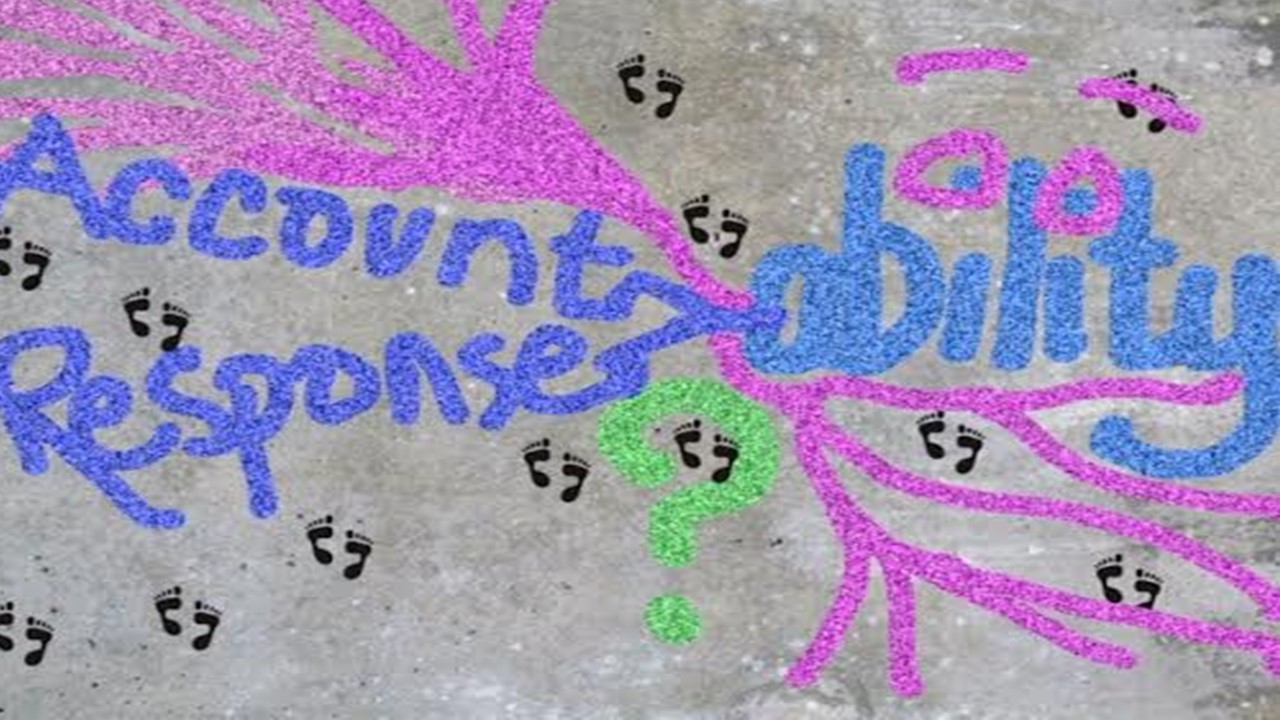
With the increasing focus by medical schools on social responsibilty (SR) and social accountability (SA) these societal difficulties are now contributing to a more integrated approach towards healthcare in context. In the image above (drawn on my iPad using the Doodle Buddy App) I reflect on the entanglement of pedagogical practices in the context of multiple and divergent needs.

Barad, K. 2007. Meeting the universe halfway: Quantum physics and the entanglement of matter and meaning. Durham, NC: Duke University Press.

Barad, K. 2014. Diffracting Diffraction: Cutting Together-Apart, Parallax, 20:3, 168-187,

Fenwick, T. 2009. Rethinking professional responsibility. In Reconceptualizing professional learning: Sociomaterial knowledges, practices and responsibilities. (Eds) Fenwick & Nerland). Routledge. Abingdon.


Monday, 14 December 2015

Affective intensities


“affect is what moves us.
It’s a hunch. A visceral prompt”
(Hickey-Moodey 2013:79).


Affect is more than emotion. It is “our power to affect the world around us and our power to be affected by it, along with the relationship between these two powers” (Hardt in Clough, 2007: ix). Drawing on Deleuzian concepts, it is a dynamic opening up to possibilities that can bring change. This transition is explained by Massumi (2002:12) as a “passing of a threshold, seen from the point of view of the change in capacity” ...“[w]hen you affect something, you are at the same time opening yourself up to being affected in turn, and in a slightly different way than you might have been the moment before. You have made a transition, however slight”. HIckey-Moodey (2013:80) explains this movement as a change in capacity that alters the limits of a body, “the margin of modulation”, that can be human or non-human, or an assemblage.

Emotion on the other hand is considered “an expression of affect in gesture and language” (Massumi 2002:232). Emotions are frequently associated with feelings leading to a physical response that Ducey (i2007:192) suggests is “autonomous from conscious thought and attention”. Emotions like fear, joy, shame, guilt and anger form part of our affective capacities that are sensed and become visible through and in certain experiences.  

In the discipline of obstetrics, high levels of tension in the birthing performance release many emotions that vary for each of the role players. For instance there is fear of error for the healthcare providers and medical students, fear of the unknown for the mother-to-be, mixed with possible joy for the arrival of a new life. At times students express anger and shock at practices they witness when human rights violations are recognized in the birthing units. Often these students feel helpless to intervene leaving them with a sense of guilt and shame. This affective force, or lack thereof, impacts on their becoming-doctors. The intensity of the forces intersecting in obstetrics learning signifies the complex junction of political, social and cultural factors that influence the unfolding birthing events in public health facilities.

The practical obstetrics learning marks a vital moment, a defining and transformative threshold for medical students that is often viewed as the time of becoming real doctors. Despite my initial apprehension at engaging with affect in this research project, it seems an essential aspect of my study that seeks to develop a socially just pedagogy in obstetrics learning. “Affect ... shadows every event. It is the source of the unexpected, of the unmotivated, of surprise” (Ducey 2007:192). Sensitivity to the affective forces in the intra-actions of the material-discursive practices in student learning can provide important insights into the practical and political understanding of student learning. The image above was created on my iPad using the Pixelmater App. The brown ribbon-like symbols are similar to HIV/Aids activism and breast cancer, signifying collective affective agency.

 Ducey, A. 2007. More than a job: Meaning, affect, and training health care workers.  in Clough, P. (ed.) The Affective Turn: Theorising the Social. Durham and London: Duke University Press. pp. 187-208.


 Hardt, M. 2007. Introduction. in Clough, P. (ed.) The Affective Turn: Theorising the Social. Durham and London: Duke University Press.


 Hickey-Moody, A. 2013. Affect as Method: Feelings, Aesthetics and Affective Pedagogy.  In (Eds.) Coleman, R & Ringrose J. Deleuze and Research Methodologies. Edinburgh University Press. Edinburgh. pp. 79-95.


Massumi, B. 2002. Navigating Movements -- with Brian Massumi. In  Zournazi, M. (ed.) Hope: new philosophies for change. Pluto Press, Australia. pp. 210-243.
 

Thursday, 26 November 2015

Photos versus drawings


When I began blogging about my PhD process I used photographs and photo collages. The first photo was taken in the sauna at a local gym. It represented the haziness of the research journey. SInce then my cellphone and iPad have exposed me to alternative pathways through drawings that open up the theory to the meanings emerging from readings and other resources.

Taking a photo involves some thought and planning. The implementation is quick, happening in a moment of time. The pressure of my finger on a point of the camera captures the image to produce the artefact. The photo is an instant product that can remain static or be reconstituted  through digital processes and other means. There appears to be a certain level of distancing with little bodily involvement.

When considering photos and drawings, both processes of image-making are opening up my rhizo-thinking to others. The images emerge from affective responses and variations representing “self-organized enfoldings” (Springgay & Zaliwska 2015:137). Both methods are creative approaches that make agential cuts thereby opening up possibilities and excluding others (Barad 2007).

There is a degree of exposure about myself and my position in terms of space, time and matter. However drawings have enabled me to place myself more on the edge, in the “open process that is emergent, vital, and abstract” (Springgay & Zaliwska  2015:137). They support my nomadic wonderings where I explore  a multiplicity of fields and flows that facilitate new lines of flight, creative offshoots (Deleuze & Guattari 1987). The gesture of drawing spontaneously through an affective response involves kinesthetic movement over a period of time. It moves away from an organized, structured response. Each artefact is a surprise that results from art-in-the-making. The drawings emerge in an iterative configuring  through the assemblage of the iPad-finger-myself As i look back over the collection of images created in the blogs over the past year, there is a distinct move away from photographs towards drawings.  

In considering what this experience means for my data collection I recognize that taking photos in the context of my research is a non-negotiable factor. Issues of confidentiality and privacy mitigate against the use photography in birthing facilities. However in the classroom I have been able to take a few photos such as the one above. This sign was created by a group of Year 4 medical students for our classroom workshops. It formed part of their roleplay relating to the lack of information given to women in labour. It resembles the many signs held up to us by beggars seeking assistance between the traffic at busy intersections -- a reflection of our inequality. The photo that is combined with lines and patterns was created using Skitch on my iPad. It illustrates how both photos and drawings can be open-ended.

Barad, K. 2007. Meeting the universe halfway: Quantum physics and the entanglement of
matter and meaning. Durham, NC: Duke University Press.

Deleuze, G., & Guattari. F. 1987. A thousand plateaus: Capitalism and schizophrenia.
Trans. B. Massumi. Minneapolis, MN: University of Minnesota Press.

Springggay, S & Zaliwska, Z. 2015. Diagrams and Cuts: A Materialist Approach to Research-Creation. Cultural Studies ↔ Critical Methodologies. 15:2:136-154.

Saturday, 14 November 2015

Drawing intensities

a Midi 4.jpg


“Matter is agentive, not a fixed essence or property of things. 
Mattering is differentiating, and which differences come to matter, 
matter in the iterative production of different differences” 
(Barad 2007:137).


When we examine our research interviews and go beyond the usual interpretations associated with the linguistic interactions and observations, valuable revelations emerge. By asking interviewees to draw their thoughts about the conversation, a wide range of responses becomes apparent.


These interesting insights are revealed through exploring the material arrangement and relationships in the material-discursive practices. The apparatus of paper-drawing implement- interviewee-interviewer involves intra-activity which becomes mutually generative. The different agential possibilities offer potential for different meanings to be revealed. Barad (2007:140) claims that “it is through specific intra-actions that phenomena come to matter”.


The image above (created using the You Doodle App then Paper App on my iPad) reflects and represents my recent interview with an experienced midwife connected to our students. It was a challenging interaction in which my facilitation skills were tested. The interview highlighted the variation of flows and intensities of the intra-actions that can occur in such an apparatus. She agreed to create a drawing yet struggled at the start and at times through the process. She apologized for “being useless”. However once she began, there were noteworthy peaks of energy, force and intensity as she shared her valuable insights both verbally and through art-in-the-making.


This encounter was dynamic, moving in different ways over the time spent with and on the drawing. At the start there was hesitation with uncertainty. Her desire was to express her thoughts in an abstract way. Where to start and where to go caused her to seemingly freeze. She shared her weakness in artistic expertise, wishing that her daughter could be there to assist her. I encouraged her, explaining that artistic talent was not necessary and acknowledging the difficulties. I checked to understand if the blockage to action could be released by changing the paper orientation or size of the sheet, and whether coloured markers or pastels would be more comfortable for her. Eventually it was the colour grey that released the block, shifting inaction to an emerging and iterative revelation of her thoughts and ideas that became visible in/on/with paper-pastels.


I felt like a croupier at a roulette table, spinning a ball round a wheel, waiting to see where it landed. I emptied out the box of pastels onto the table. Perhaps the movement and array of colours could entice some action. It was the grey pastel that landed and gave me the next move. When my interviewee began speaking about the grey area that our students move into as they are becoming doctors, I passed her the grey pastel and the drawing began. She then moved into the next space on the paper, choosing blue as the colour of hope while explaining the bifurcation of ways in which students’ experiences influence their obstetrics learning.
This encounter was particularly meaningful to me. It illustrated the variation of intensity that was driving this healthcare provider/educator and influencing her power to engage with and through the paper. Deleuze and Guattari’s (1987) concept of body co-ordinates related to longitude and latitude helps explain the forces that shape and influence art-in-the making leading to the drawing on paper. On the one hand the longitude is described as “the set of relations of speed and slowness, of motion and rest, between particles that compose [the body] ... between unformed elements” (Deleuze 1988:127). On the other hand the latitude is “the set of intensive affects of a body, what the body can do and what it can undergo in joining assemblages” (Bonta & Protevi 2004:104). Both the longitude and latitude make up the co-ordinates that inform the body’s cartography (Deleuze & Guattari 1987).


McCormack (2012:136) points out that the “intersection of latitude and longitude is interstitial or inbetween existence”. It is part of our becoming through the in/determinancy of matter. There is no certainty in advance about what we can and cannot do. Haecceity, meaning the ‘thisness of things”, is a Deleuzian term that explains our “becomings in action” through the uniqueness of each individual (Sauvagnargues 2013:43).


After the interview both myself and the midwife were changed by this drawing experience. Through different roles and intra-actions we reached the point of recognizing the similar threats that both students and midwives endure in a threatening environment.


“the material and the discursive are mutually implicated 
in the dynamics of intra-activity”
(Barad 2007:184).


Barad, K. 2007. Meeting the universe halfway: Quantum physics and the entanglement of matter and meaning. Durham, NC: Duke University Press.


Bonta, M. & Protevi, J. 2004. Deleuze and Geophilosophy: A Guide and Glossary (Edinburgh: Edinburgh University Press.  


Deleuze, G. & Guattari. F. 1987. A thousand plateaus: Capitalism and schizophrenia. Trans. B. Massumi. Minneapolis, MN: University of Minnesota Press.


Deleuze, G. 1988. Spinoza: Practical Philosophy. City Lights Books. San Francisco.


MacCormack, P. 2012. Posthuman Ethics Embodiment and Cultural Theory. Ashgate Publishing Limited, Surrey.

Sauvagnargues, A. 2013. Deleuze and Art. Bloomsbury, London.

Monday, 2 November 2015

Giving and receiving gratitude


“Gratitude is both a response to moral behavior and a motivator of moral behavior” (McCullough et al 2001:250).

Last week a student walked up to me near campus and with a beaming expression keenly told me how much she had appreciated our discussions in the recent focus group. She mentioned sharing her learning and experience with others. She feels more connected with different aspects of her learning. A video recording of our conversation could have captured this special moment where I felt drawn in by the student’s warmth and gratitude.  

I question why, as health educators we tend to give more space and time for criticism than appreciation? The health system is governed by regulatory practices focused on accountability to indicate measures of quality. Similarly, the education system is driven by assessment processes to maintain requisite standards. It becomes apparent that expressions of care and kindness are often missing, perhaps oppressed by power and regulation within the hierarchy of medicine. There seems scope for more time to be spent on gratitude, an emotion that is incorporated in the growing movement of positive psychology and mindfulness.

In Obstetrics many students have commented on the joy they felt as recipients of gratitude. For instance even after a traumatic delivery when the student was left with a feeling of helplessness, there was a sense of worth when thanked by the new mother. A small act of kindness has a large impact. I continue to question why this is notable rather than naturally forthcoming.

While reading students' reflective commentaries over the past 4 years, it has struck me how much they value gestures of gratitude. These have been demonstrated in different ways such as a baby named after the student or simply a thank you for being present at a vital time. In recognizing the value of gratitude, our department now sends out complimentary notes to individual nurses in the birthing facilities who students identify as being special educators and role models.

Zournazi (2002) relates gratitude to ethical and political responsibilities suggesting that “it is through our everyday experiences and choices that gratitude manifests in its subtle as well as substantive forms” (2013:287). In a similar vein, Braidotti (2013) writes about affirmative ethics and Barad (2007) about the need to interrogate our intra-actions in a positive manner looking in on the finer details and connections rather than critique.

Recent studies using stories of kindness and compassion from personal narratives related to the Holocaust have indicated the neurological changes that are triggered through acts of gratitude (Fox et al 2015). Shariatmadari (2015), editor of The Guardian, refers to this study in his column where he questions the under-valuing of gratitude, suggesting that it could be the most important social emotion and ought to get more attention. Wood, Froh and Geraghty (2010) point out how under-researched gratitude is, yet it could become “a key element for sparking positive changes in individuals, families, and organizations” (Bono et al 2003:272).

Using Baradian concepts, perhaps gratitude can be described as an appreciation of the entanglement of our intra-actions when our in/separate roles coalesce; an apparent apartness that is made visible by the coming-together through choice rather than obligation (Barad 2007). In Obstetrics, the act of birthing can become a moment of superposition creating a lasting memory which impacts on the being and becoming mother/doctor. If we delve deeper into the relationships ”to feel what lurks in the interstices” (Stengers in Zournazi 2002:145) there can be a sense of hope and appreciation of the value gained from the togetherness of mother, infant, helper and the materialities in the intra-actions that transpire.

McCullough et al. (2001:250) put forward three reasons for giving more attention to gratitude.
  1. It is used less than other positive emotions
  2. It is experienced and expressed in a large variety of ways both in local and global contexts due to cultural differences
  3. It relates to “a good outcome as a result of the actions of another person” (2001:250)

In developing a socially just pedagogy, it seems that gratitude can become an important component to create a culture of appreciation that can complement hope for change.

The image above was drawn on the iPad using Adobe Ideas App. It highlights how we can breathe gratitude through our actions and intra-actions.


Barad, K. 2007. Meeting the universe halfway: Quantum physics and the entanglement of matter and meaning. Durham, NC: Duke University Press.

Bono, G., Emmons, R. A. & McCullough, M. E. 2004. Gratitude in Practice and the Practice of Gratitude. In (Eds.) P. A. Linley & S. Joseph. Positive Psychology in Practice. John WIley & Sons, New Jersey. 464-481.

Fox, G.R., Kaplan, J., Damasio, H. & Damasio A. 2015. Neural correlates of gratitude. Frontiers in Psychology. Retrieved  http://journal.frontiersin.org/article/10.3389/fpsyg.2015.01491/full

McCullough, M. E., Kilpatrick, S. D., Emmons, R. A. & Larson, B. 2001. Is Gratitude a Moral Affect? Psychological Bulletin. 127:2:249-266.

Shariatmadari, D. 2015. Could gratitude be the most important emotion of all? The Guardian. 30th October.

Wood, A. M., Froh, J. J. & Geraghty, A. W. A. 2010. Gratitude and well-being: A review and theoretical integration. Clinical Psychology Review. doi:10.1016/j.cpr.2010.03.005.

Zournazi, M. 2003. Hope: New philosophies for change. New York. Routledge.

Zournazi, M. 2013. Critical Hopes – gratitude and the magic of encounter. In (Eds). V. Bozalek, R. Carolissen, B. Liebowitz & M. Boler. Discerning Critical Hope. Routledge.